
Portugal
Your Gateway to European Remote Work 🇵🇹
Portugal's Digital Nomad Visa
Dreaming of swapping your desk for a sunny café in Lisbon, or an Atlantic view from a co-working space in Porto? Portugal has rolled out the welcome mat for remote workers with its Digital Nomad Visa, officially known as the D8 Visa (or the "Temporary Residence Visa for the Exercise of Professional Activity Provided Remotely Outside the National Territory").
This new visa path, introduced in late 2022, is specifically designed for non-EU/EEA citizens who earn an income from outside Portugal, offering a clear route to legal long-term residency.
D8 Digital Nomad Visa: The Essential Details
The D8 Visa is perfect for employees of foreign companies or freelancers/self-employed individuals with clients outside of Portugal. It provides two main options:
Temporary Stay Visa: Valid for up to 1 year, ideal for testing the waters.
Residency Visa: Initially valid for 4 months, which allows you to enter Portugal and apply for a 2-year Residence Permit upon arrival, renewable for three more years, leading to potential permanent residency or citizenship after five years. This is the path for long-term commitment.
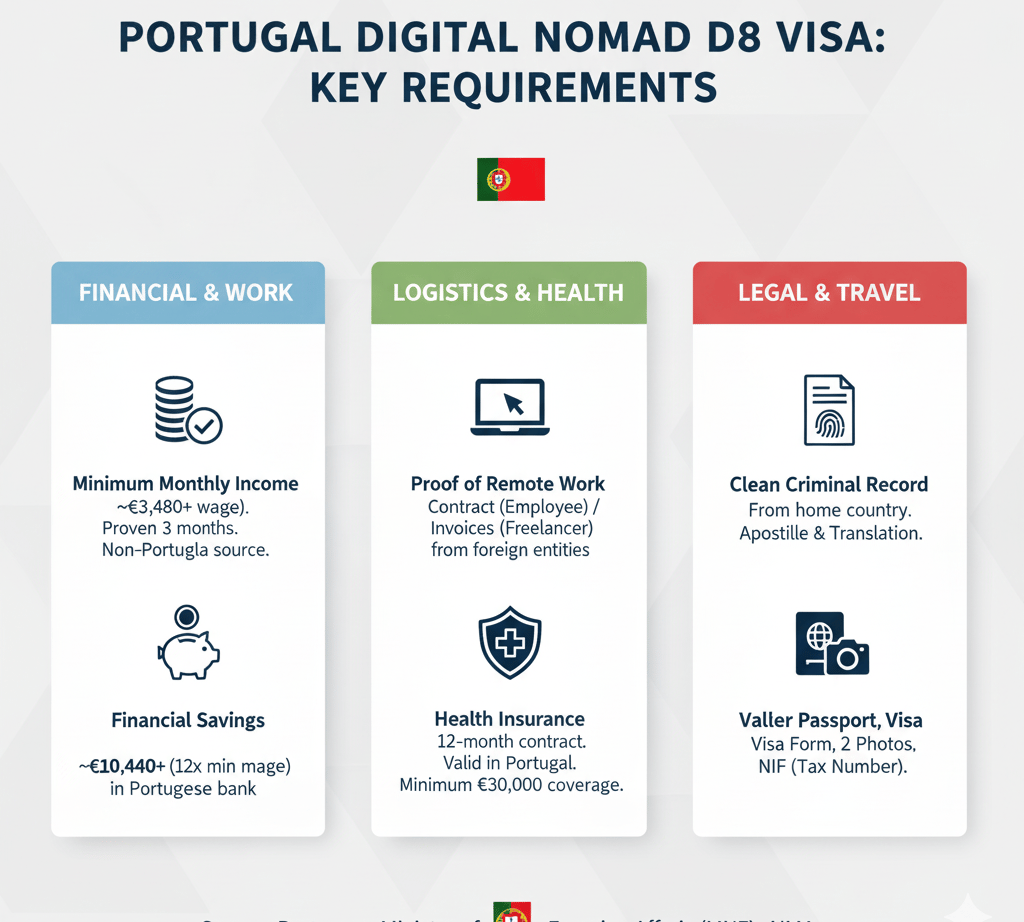
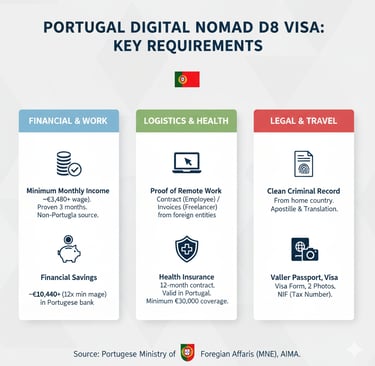
Key Requirements (for the Residency Visa path)
Note on Dependents: If you apply with a spouse, you must add 50% of the minimum income requirement. For each dependent child, add 30% of the minimum income requirement.
The Step-by-Step Application Procedure
The application process is done in two main phases: applying for the initial visa in your home country and then applying for the residence permit in Portugal.
Phase 1: Visa Application (Outside Portugal)
Obtain a NIF (Número de Identificação Fiscal): This Portuguese tax number is essential for almost everything, including opening a bank account. You can apply for this remotely through a legal representative.
Open a Portuguese Bank Account: You will need a local account to show proof of funds. This can often be done remotely with a power of attorney.
Gather Documents: Collect all the required documents listed above. Ensure your criminal record check is recent, apostilled, and translated as required. Secure your accommodation agreement.
Apply at the Portuguese Consulate/VFS Global: Book an appointment at the Portuguese Embassy or Consulate (or the VFS Global center if they handle visa applications in your country of residence).
Attend Interview & Submit Application: Submit your complete document package and attend a visa interview. Pay the application fees (fees vary, check your local consulate's website).
Receive the Visa: If approved, you will receive a 4-month D8 Residency Visa in your passport.
Phase 2: Residence Permit Application (In Portugal)
Travel to Portugal: Enter the country using your new D8 Visa.
Attend AIMA (formerly SEF) Appointment: The Portuguese Consulate will often schedule a final appointment with AIMA (Agency for Integration, Migration and Asylum, formerly SEF) within your 4-month visa window. You will submit your biometrics (fingerprints and photo) and your final documents.
Receive the Residence Card: Once approved, AIMA will issue your 2-year Residence Permit card, allowing you to live and work legally in Portugal.
Renew: The residence permit is renewable for periods of 3 years. After 5 years of legal residency, you are eligible to apply for Portuguese permanent residency or citizenship.
Official Government Information & Links
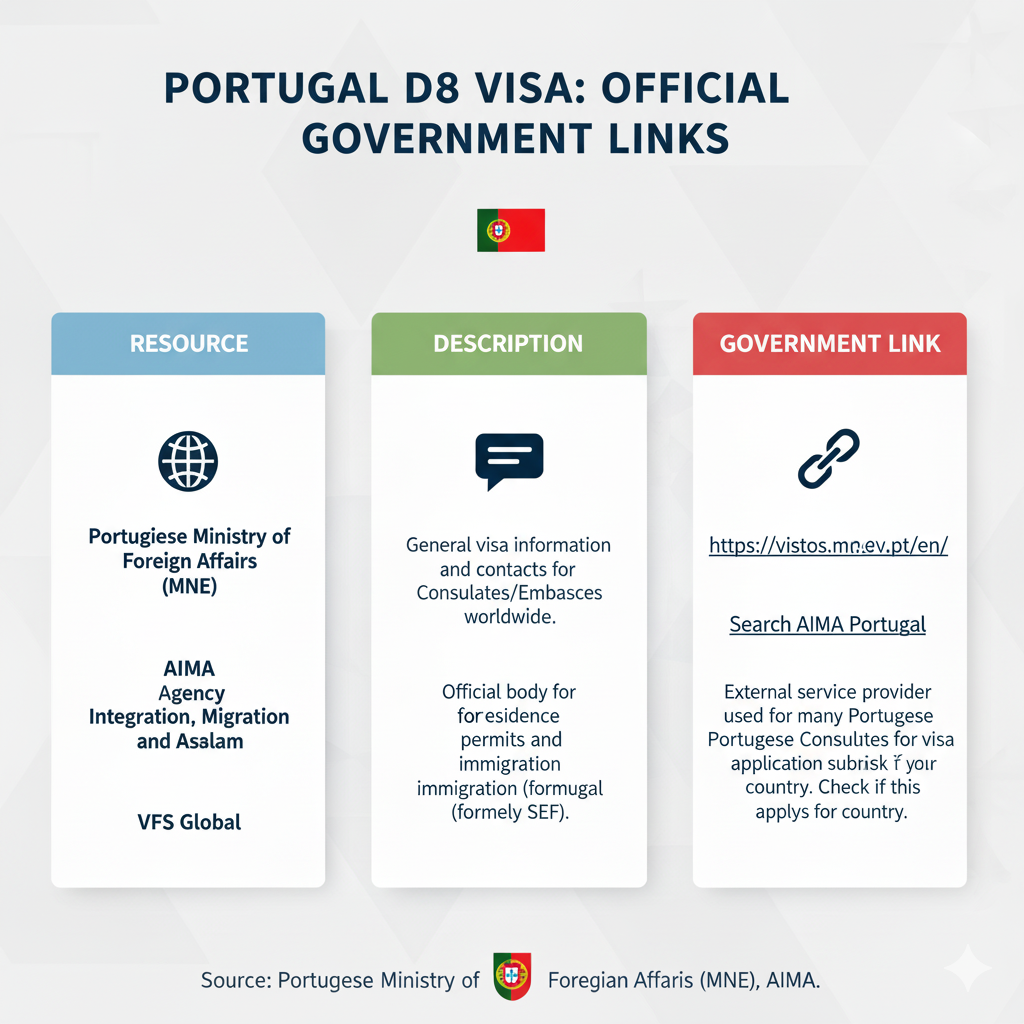
For the most accurate forms, fees, and procedures, always check the official Portuguese government portals.
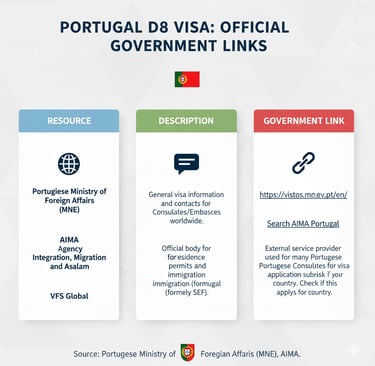
ResourceDescriptionGovernment LinkPortuguese Ministry of Foreign Affairs (MNE)General visa information and contacts for Consulates/Embassies worldwide.https://vistos.mne.gov.pt/en/AIMA (Agency for Integration, Migration and Asylum)Official body for residence permits and immigration in Portugal (formerly SEF).Search AIMA PortugalVFS GlobalExternal service provider used by many Portuguese Consulates for visa application submission. Check if this applies in your country.Search VFS Global Portugal Visa
Disclaimer: Visa regulations, fees, and minimum wage/income requirements are subject to change by the Portuguese government. Always consult the official government websites or a qualified Portuguese immigration lawyer for the most current information before applying.
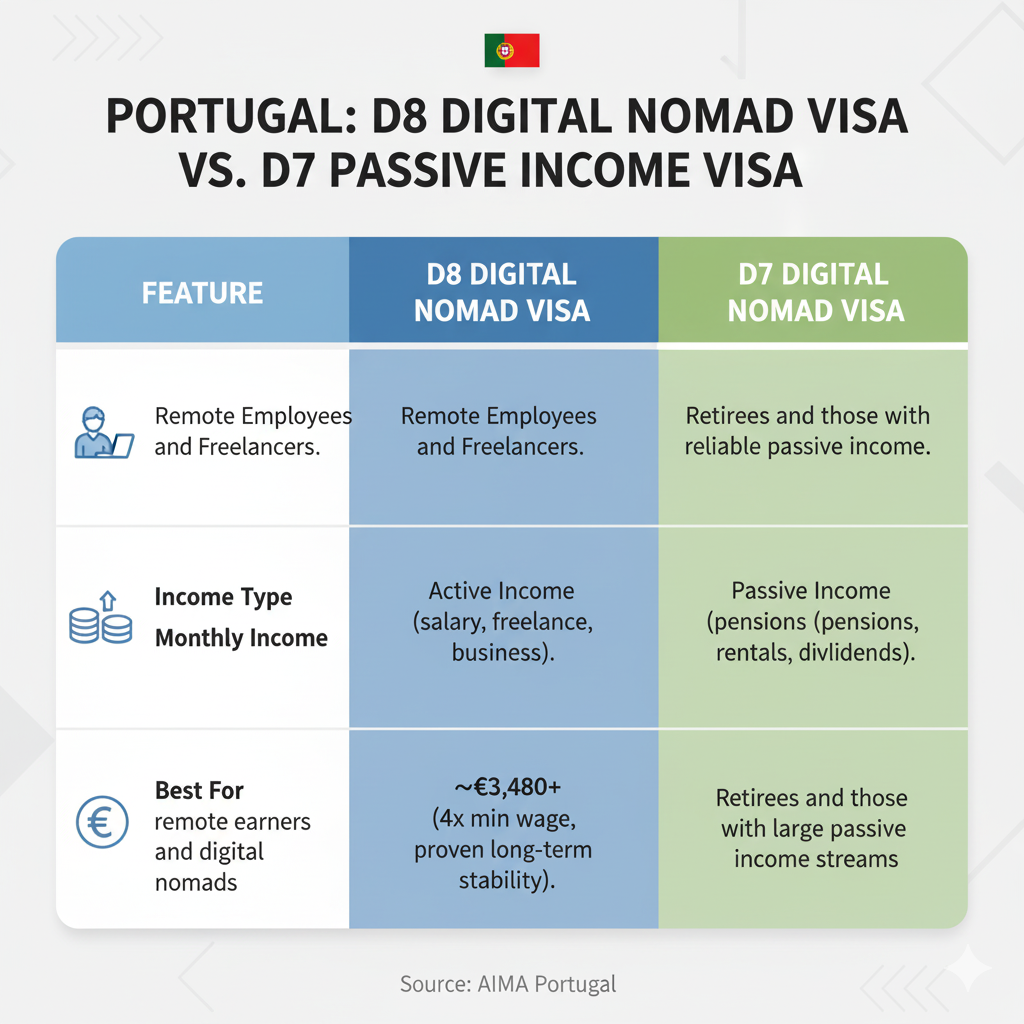
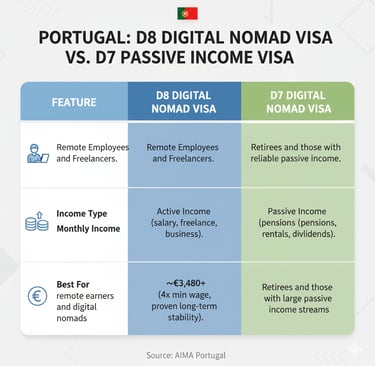
Is the D7 Visa a Better Option for Remote Workers? (A Quick Comparison)
Before the D8 Visa, many digital nomads used the D7 (Passive Income) Visa. While the D7 is still valid, the D8 is now the preferred route for remote workers.
If your income is solely active (a remote salary or freelance earnings), the D8 Visa is the correct and safest path to ensure approval.